100 / 200 · 1:2 · 30 sessions
30 sessions. Protocol Kit in shipment one on subscribe.
Mix. Drink. Build.
Ratio/01
Comparison sheet
Coffee vs one dose
100 / 200 · 1:2
Five cups vs one session
Five cups.
Five restarts.
Or one dose at the start.
A four hour session on coffee
Five separate doses. Around 475 mg caffeine, four walks back to the machine, a dose that changes with the bean and the barista.
The same session on Ratio/01
One session dose before you start. 100 mg caffeine, paired 1:2 with 200 mg L-theanine. Nothing to re-dose, nothing to decide again.
Dosing pattern / one 4 hour session, from the moment you sit down
Schematic, not measured blood levels
Coffee, 5 cups
5 doses · approx. 475 mg caffeine · 0 mg L-theanine
Cup 1Cup 2Cup 3Cup 4Cup 5
Ratio/01, 1 session
1 dose · 100 mg caffeine · 200 mg L-theanine
One session dose at the start of the block. No second decision.
Start+1:00+2:00+3:00+4:00
30 sessions per pack. Subscribe and shipment one carries the full Protocol Kit.
1:2
100 mg caffeine to 200 mg L-theanine. One session dose. Weighed, sealed, printed on the face.
Protocol Kit
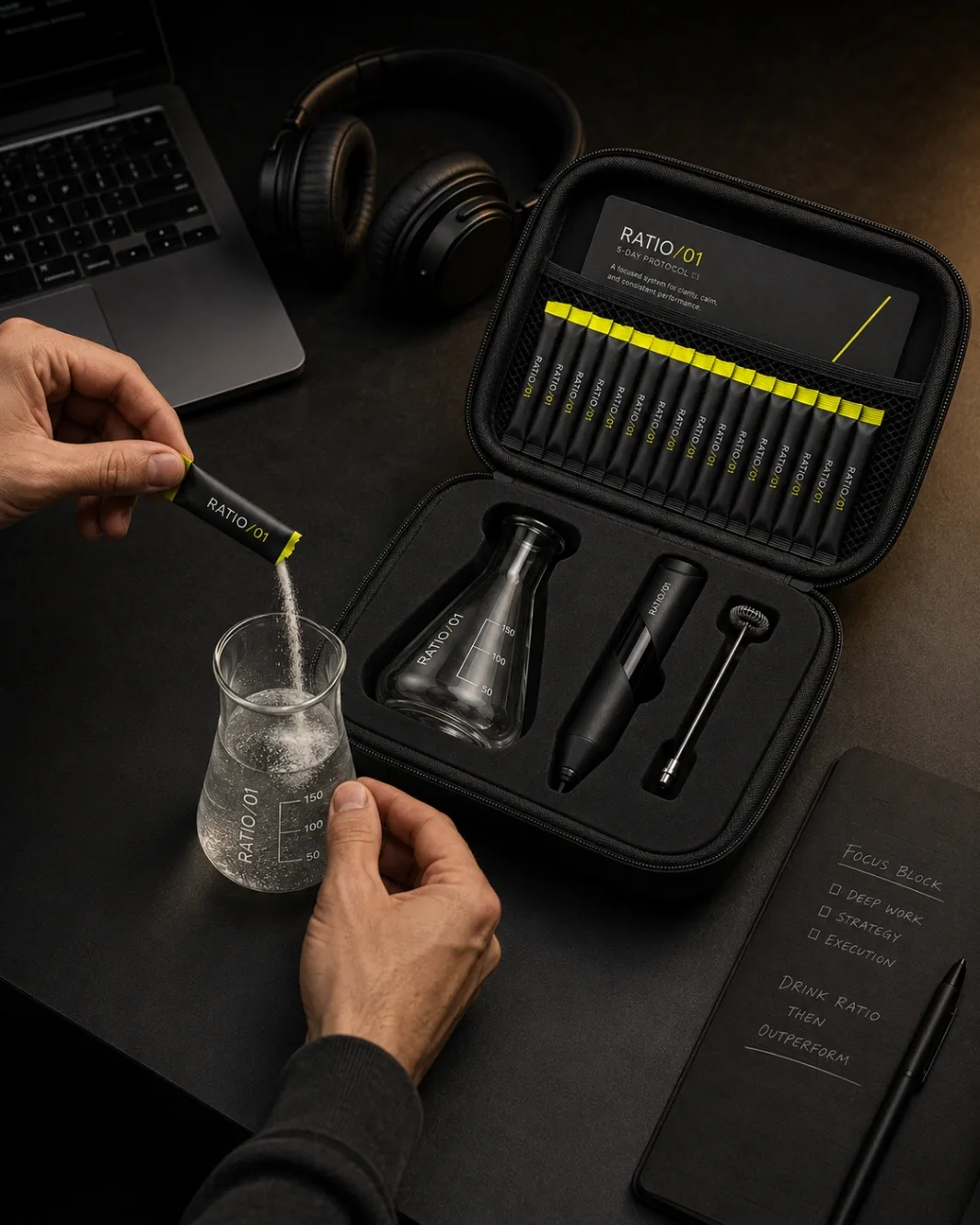
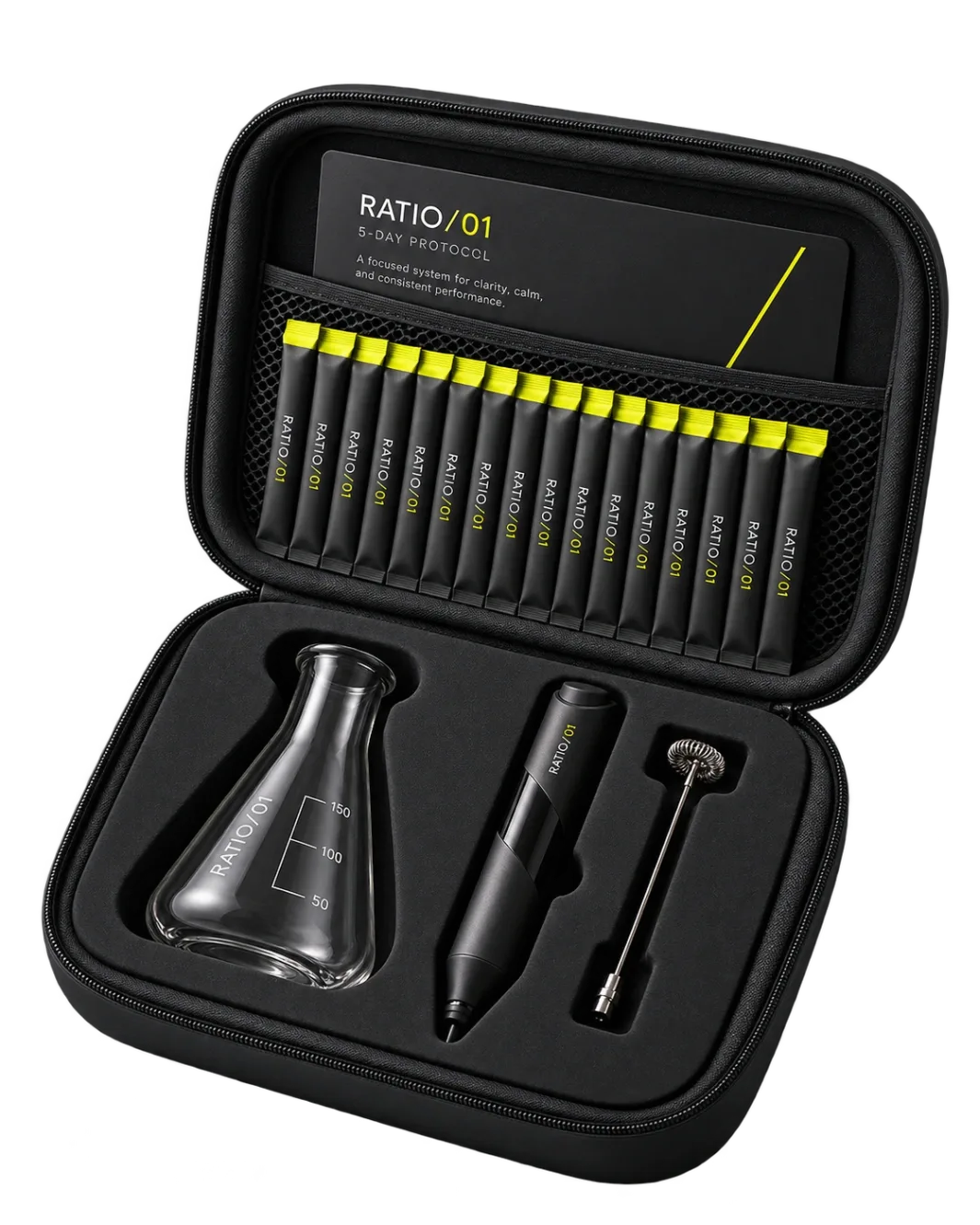
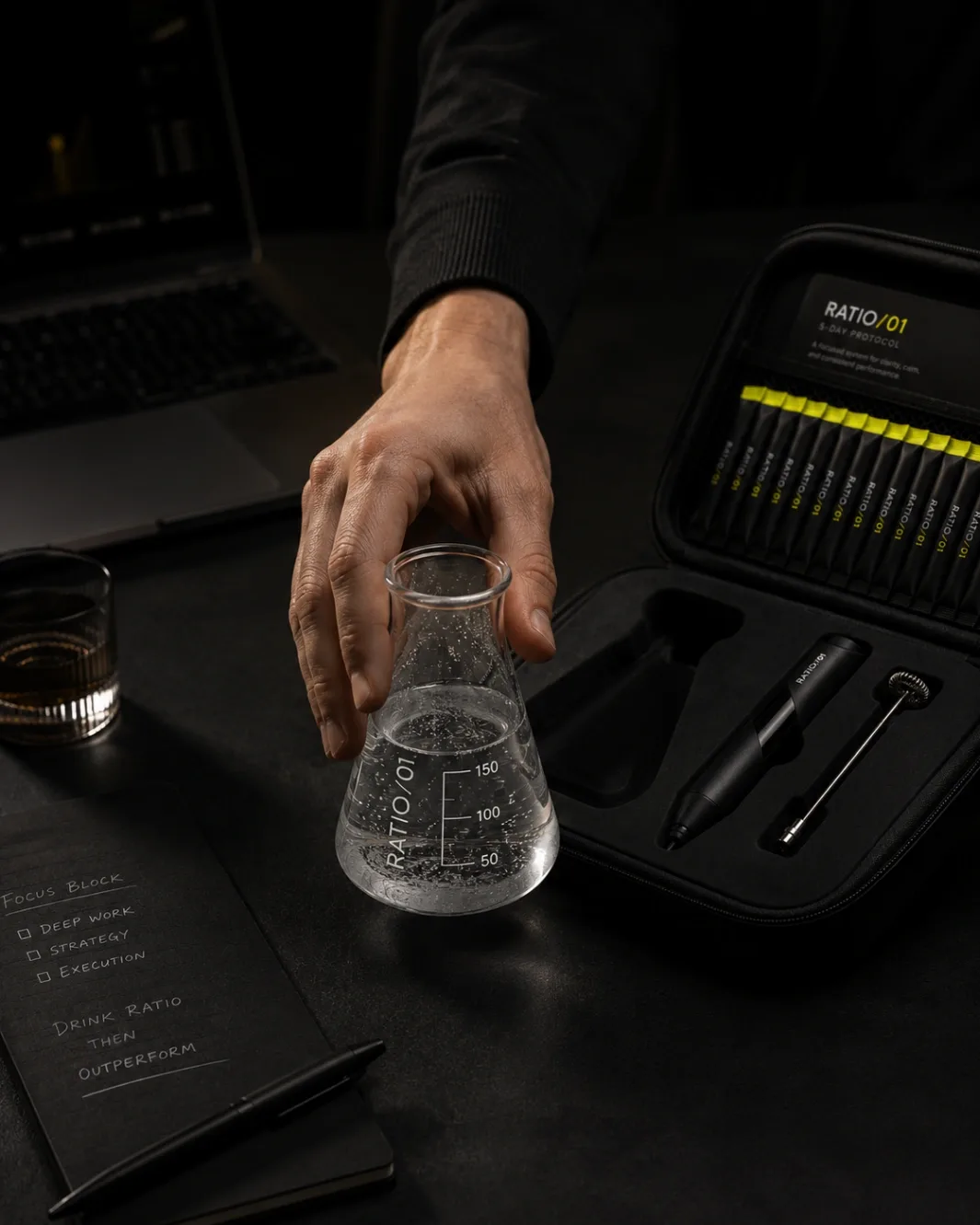
Case, lab glass, mixer, MIX, CLEAN. The preparation happens once, at your desk.
5-Day Protocol
Five real work sessions. Score FOCUS, CALM, OUTPUT. Judge the work, not the sip.
Session, not serving
Built for the start of a block. Not all-day grazing.
How to read the chart
The problem is not the coffee. It is deciding five times.
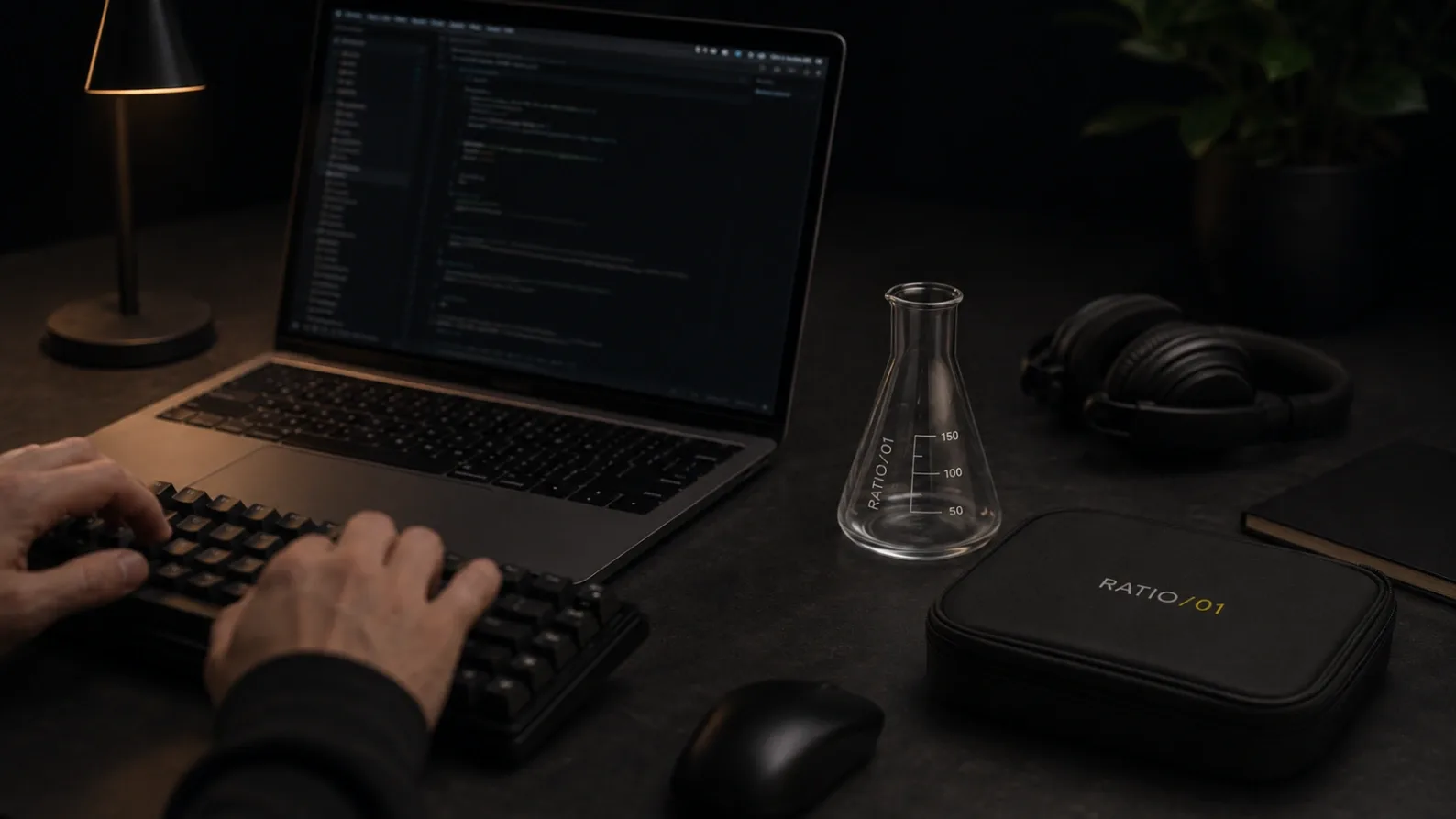
Coffee is a strong habit with a weak protocol. Every hour or so the session asks the same question again: another cup, and how strong. Five cups means five of those decisions, each one a walk, an interruption and a dose nobody measured. Ratio/01 asks once, before the block.
Peaks
Every cup is a new intake.Grind, machine and cup size decide the dose, so no two peaks in your day are the same size.
Dips
Between cups the session drops off.That dip is usually where the block breaks: you leave the desk, and the context you were holding leaves with you.
Flat
The Ratio lane is flat because there is nothing to re-dose.One session holds the whole dose: 100 mg caffeine and 200 mg L-theanine, mixed once, before the first line of work.
The numbers
One session, side by side.
Coffee column based on a 240 ml cup of brewed coffee at roughly 95 mg caffeine, the figure USDA FoodData Central lists for brewed coffee. Your cup may be stronger or weaker, which is part of the point.
| Per 4 hour session | Coffee, 5 cups | Ratio/01, 1 session |
|---|---|---|
| Caffeine | Approx. 475 mg | 100 mg |
| L-theanine | 0 mg | 200 mg |
| Ratio | Not applicable | 1:2, caffeine to L-theanine |
| Intakes | 5 | 1 |
| Dose known | No. It shifts with bean, grind, machine and cup | Yes. Weighed per session, printed on the face |
| Interruptions | 4 refills away from the desk | 0. Prepared once, before the block |
| Decisions | 4 times: another one, and how strong | 1 time: the session starts now |
EFSA states that single doses of caffeine up to 200 mg, and up to 400 mg spread over the day, do not raise safety concerns for healthy adults. One session is 100 mg. Count any coffee you drink beside it.
€49.95
The protocol
One preparation. Then nothing to re-dose.
Where coffee sends you back to the machine four times, RATIO/01 happens once, at the desk, in fixed order. The order is the product.
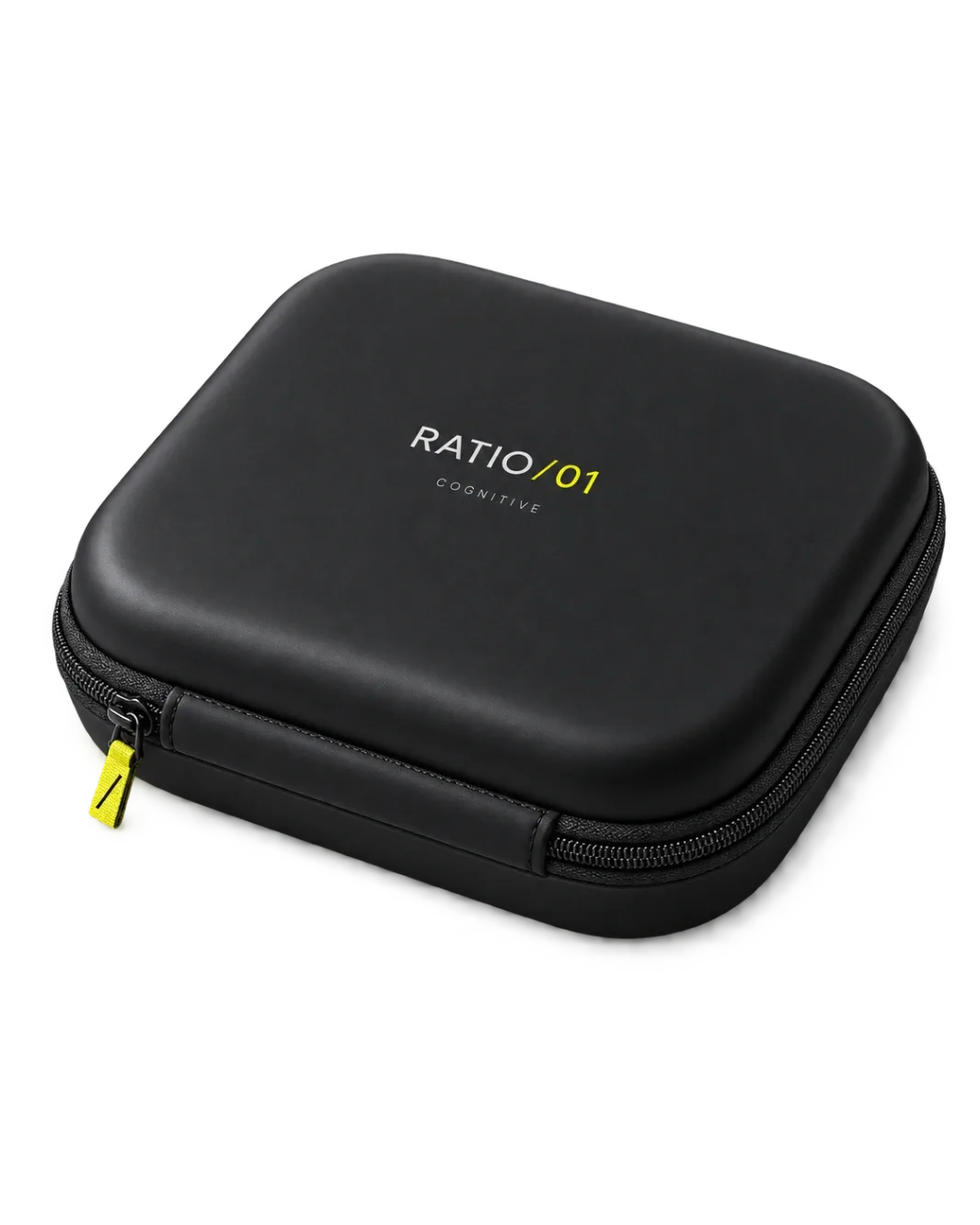
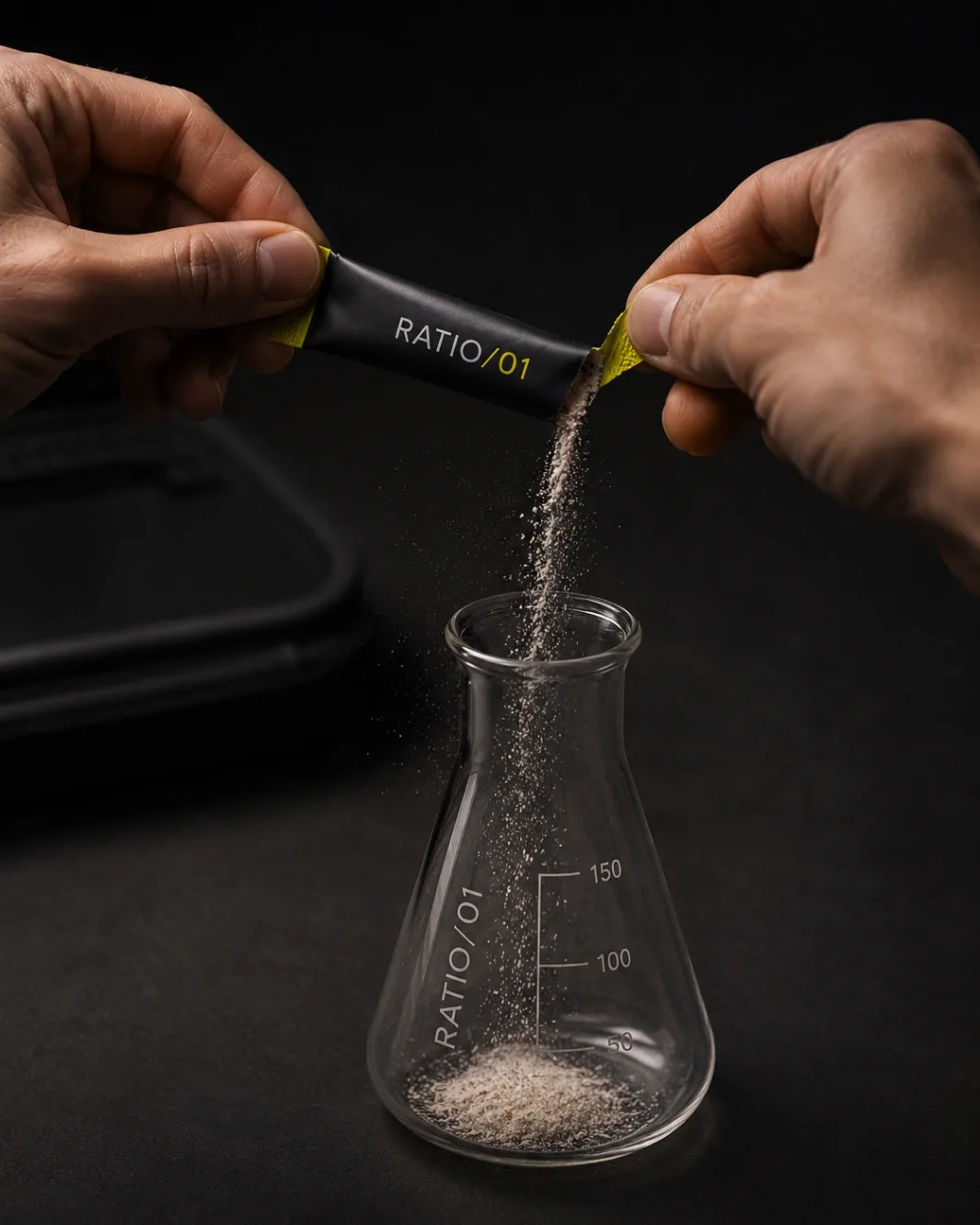
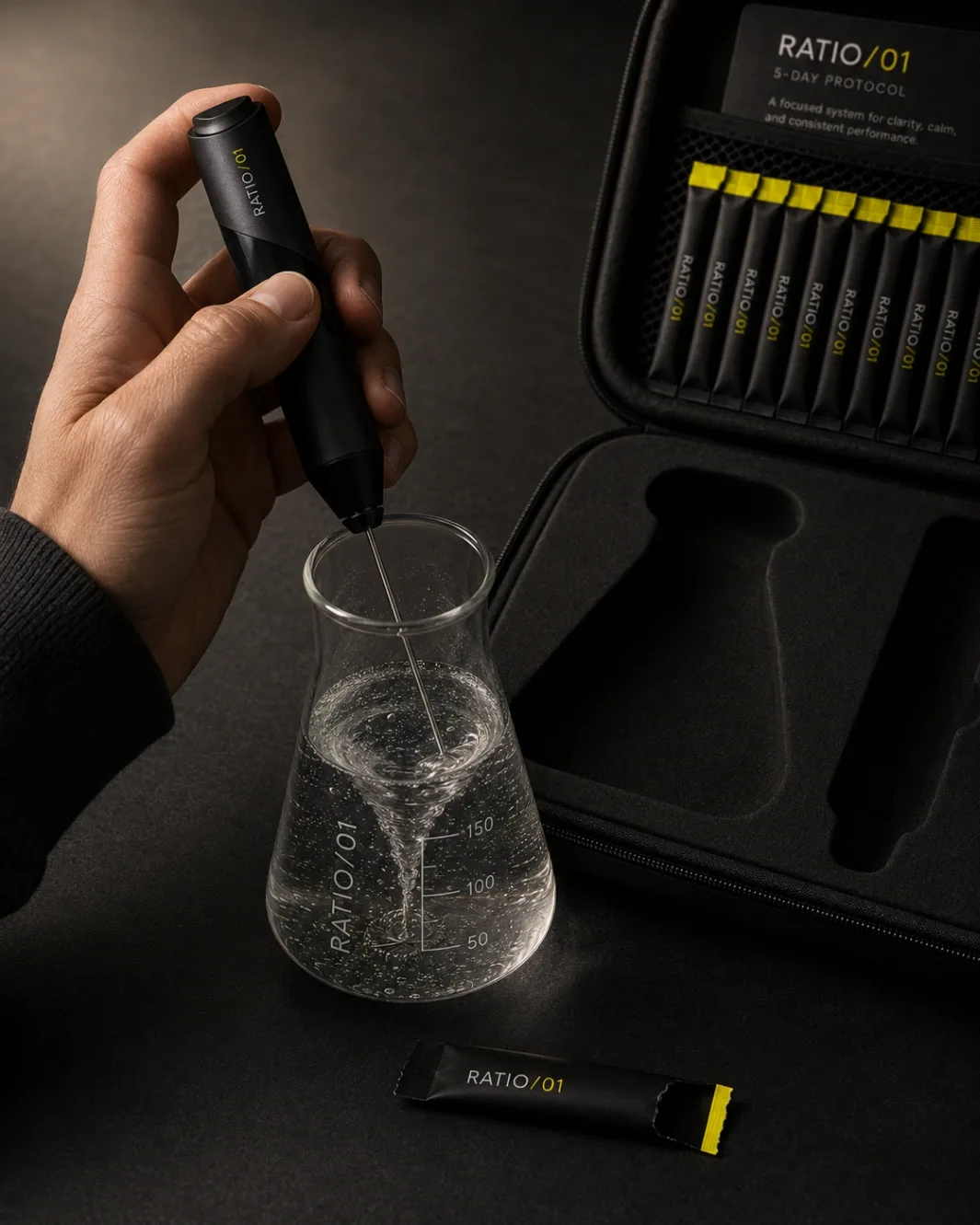
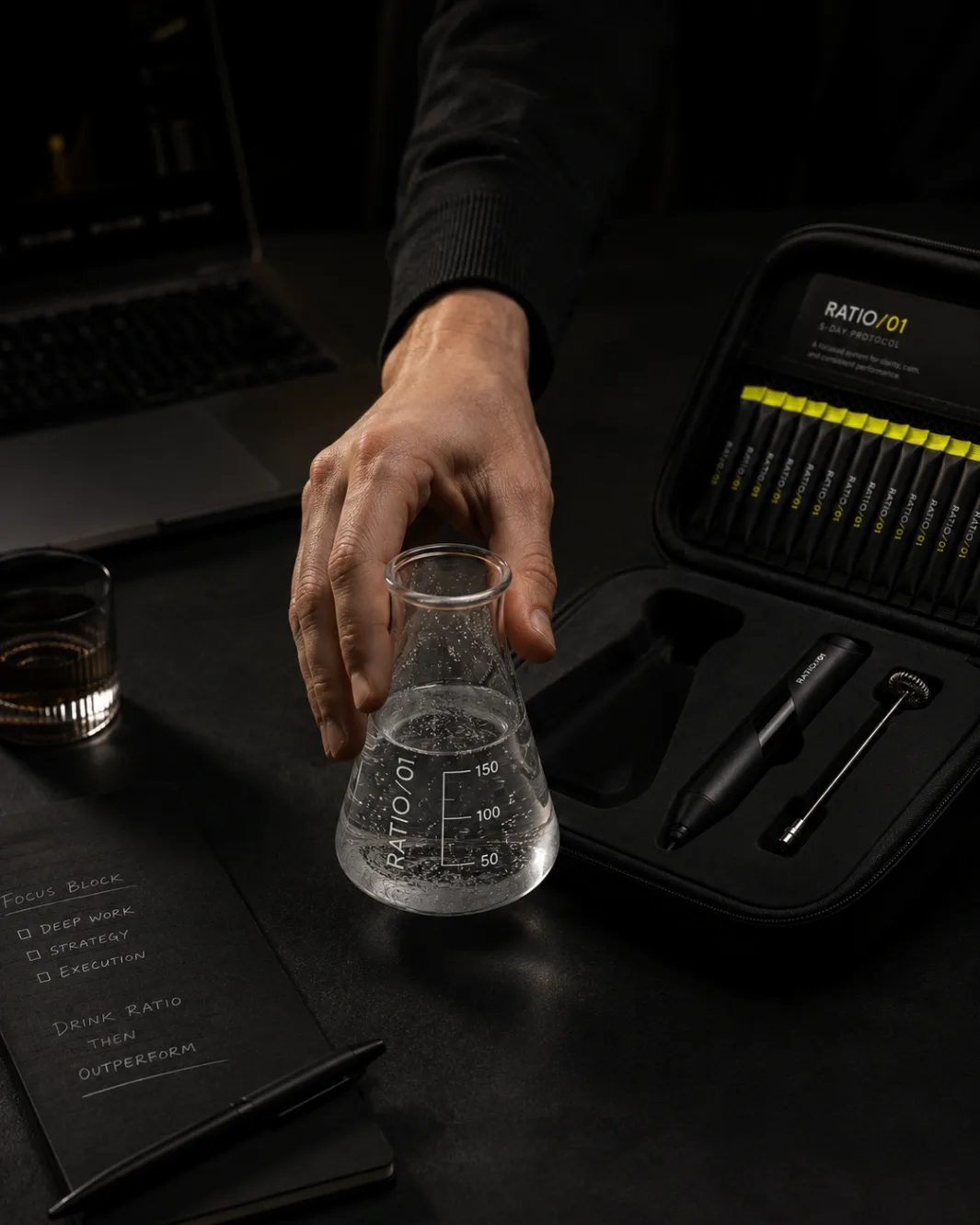
Concept studies, not final pack shots. Four steps take about a minute, once. The fifth is the block.
Why 1:2
100/200
Caffeine 100 mg. L-theanine 200 mg. Twice as much of the amino acid as of the stimulant. That ratio is the product signature, and the reason a session is not simply a stronger coffee.
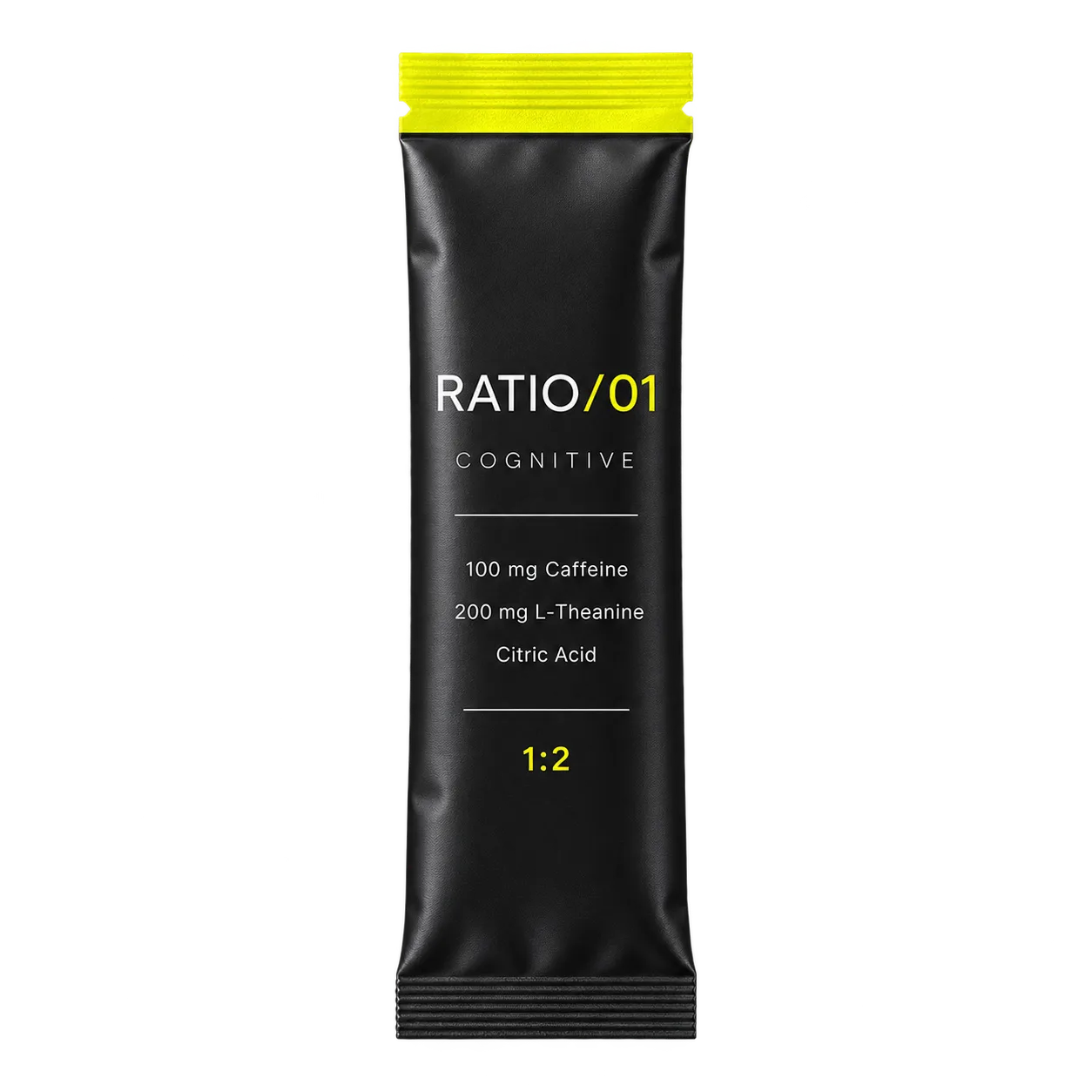
L-theanine is the reason the dose can stay small.
L-theanine is an amino acid found in tea leaves. It has been studied for years alongside caffeine, because tea delivers the two together and coffee does not. RATIO/01 puts that pairing in one measured dose instead of leaving it to a brewing method.
Caffeine
100 mg. A session dose, not a maximum.Roughly one cup of brewed coffee, taken once, at a moment you choose.
L-theanine
200 mg, twice the caffeine.The ingredient coffee does not carry. In tea the two arrive together, which is what the research below looks at.
Citric
100 mg. Sharp, short, no candy.Solubility and a sensory start signal, closer to tonic than to a soft drink.
What we do not claim: that 200 mg of L-theanine extends caffeine or guarantees a flat session. The flat lane in the chart is a dosing pattern, one intake instead of four. The 1:2 ratio is a product signature, not clinical proof.
Published work on the combination
Read it yourself before you believe us.
These are peer reviewed papers on caffeine and L-theanine as ingredients, run by third parties on other preparations. They are here so you can check the field, not as evidence about this product.
-
01
Effects of L-theanine, caffeine and their combination on cognition and mood
Placebo controlled study in healthy adults comparing the ingredients alone and combined on attention tasks and self reported mood.
Haskell, Kennedy, Milne, Wesnes, Scholey. Biological Psychology, 2008 -
02
The combined effects of L-theanine and caffeine on cognitive performance and mood
Compared the combination against caffeine alone on attention switching and alertness in healthy volunteers.
Owen, Parnell, De Bruin, Rycroft. Nutritional Neuroscience, 2008 -
03
The combination of L-theanine and caffeine improves cognitive performance and increases subjective alertness
Double blind crossover trial in healthy adults, testing the pair against placebo on attention tasks and subjective alertness.
Giesbrecht, Rycroft, Rowson, De Bruin. Nutritional Neuroscience, 2010 -
04
Acute effects of tea constituents on cognitive function and mood: a systematic review and meta-analysis
Review pooling trials on L-theanine, caffeine and EGCG. Useful for how mixed and modest the findings across studies actually are.
Camfield, Stough, Farrimond, Scholey. Nutrition Reviews, 2014 -
05
Scientific Opinion on the safety of caffeine
The EFSA opinion behind the reference amounts on this page: single doses up to 200 mg and up to 400 mg per day for healthy adults.
EFSA Panel on Dietetic Products, Nutrition and Allergies. EFSA Journal, 2015
None of these studies were run on RATIO/01, and no health claim for L-theanine is authorised in the EU. Doses and results vary between papers. Treat them as the reason the pairing exists, then judge the product over five of your own sessions.
The kit
Everything the coffee run needs, now on your desk.
Subscribe and shipment one carries the Protocol Kit. The case stays black. Colour lives inside: sachet, tab, card, slash.
- 30 sessions, each one sealed and measuredSession
- Black hard shell caseCase
- One lab glass, no number on itGlass
- One assembled mixer, MIX and CLEANTool
- 5-Day Protocol card: FOCUS, CALM, OUTPUTCard
€49.95
One-time order: 30 sessions, without the kit.
Qualification
Swap the fourth cup, not your morning coffee.
RATIO/01 replaces the pattern of re-dosing through a block. It is not a bigger caffeine hit, and it is not trying to be your 07:30 espresso.
Worth it if
- Your session output is income: a delivery, a launch, a brand live in the block.
- You already drink three or four coffees through a working block.
- 15:00 is clearly weaker than the start of your session.
- You want one measured dose instead of four guesses.
Not worth it if
- You want more energy. This is less caffeine, not more.
- You are hunting a flavour. It is sharp and lightly bitter on purpose.
- You graze caffeine all day. This is one dose at one moment.
- Your session already starts by itself.
FAQ
The honest questions.
Does one session contain as much caffeine as four cups of coffee?
No. One session is 100 mg caffeine, roughly one cup of brewed coffee. What it replaces is the pattern of four intakes across a session, not 380 mg of caffeine.
Then why say it can stand in for four cups?
Because in a four hour block the coffee habit is four decisions, four walks and four different doses. RATIO/01 is one measured dose at the start of the block. Fewer milligrams, one intake.
What does the L-theanine do?
L-theanine is the amino acid tea carries alongside caffeine and coffee does not. Published research studies the two together, which is why RATIO/01 pairs 200 mg with 100 mg caffeine. We make no health claim for it: the papers are listed on this page so you can read them yourself.
Is the chart based on measurements of my body?
No. The chart shows when a dose happens over one session, four intakes against one. It is an illustration of the dosing pattern, not a graph of blood levels.
Can I still drink coffee?
Yes. Keep your total intake in mind: EFSA considers up to 400 mg of caffeine per day, and single doses up to 200 mg, not a safety concern for healthy adults. One sachet is 100 mg.
When do I take it?
At the start of a session where output counts. Mix, drink, work. It is a session dose, not an all day drink.
How do I know if it works for me?
Use it in five real work sessions and score FOCUS, CALM and OUTPUT on the 5-Day Protocol card. Judge the work, not the first sip.
What is in the pack?
30 sachets, one per session. Subscribe and shipment one carries the full Protocol Kit: hard case, lab glass, mixer, MIX, CLEAN and the 5-Day Protocol card.
One action
One dose.
Then work.
30 sessions per pack. 100 mg caffeine, 200 mg L-theanine, one intake at the start of the block. Mix. Drink. Build.
Food supplement. Not a medicine. Not for children, pregnancy or breastfeeding.
RATIO/01